
Search This Blog

Showing posts with label New Business. Show all posts

Sunday, July 5, 2015

Your lean business needs more fat

If your solo business isn't quite giving you the lifestyle you thought it would, here's where you're probably going wrong.
When you first imagined starting your own business, you probably envisaged flexible hours, half-days, more than four weeks a year for holidays, the ability to earn what you're worth, work-life balance, and doing something you love.

In short, you imagined a better life.

But for many soloists, this doesn't match the reality. Most of us know all too well about the low income, long hours, and lack of holidays that can come with being your own boss.

Why does this happen? it's because our businesses are too lean.

"When you set the goal of just supporting yourself, you make a miscalculation about the income your business needs to support your better life."

Here's what I mean by 'too lean'

too often soloists set their sights on "supporting themselves". In other words:

"I'd be happy if I could do what I love for a living, and just earn enough to pay my bills."

That's Nice.
The problem with this 'calculation' is it's totally out of whack. It's based on the cost of the bare necessities they need to survive: food, rent/mortgage, and other basic bills. That may be the cost of survival, but it's not the cost of the better life they imagined!

When you set the goal of just supporting yourself, you make a miscalculation about the income your business needs to support your better life.

Whats the cost?

You can't afford time off, or a holiday, or to hire help, or to invest in the business. You end up with no marketing budget, no insurance, no Xmas party, no staff developmet, and you don't get to invest in yourself (you never end up taking that life-altering week with Tony Robbins). You end up doing your own book-keeping, and your own marketing (Facebook of course because it's free), instead of doing what you love.

Sound Familiar?

What would a supportive business look like?

It's the lioness that does the hunting for her family. She needs to find enough food for herself and her cubs, and also to satisfy the voracious appetite of the protector of her family, the male lion. In the same way, you need to find enough income to feet yourself and all those who support your business and your life.

What would it take to support your better life?

You might need a couple of staff to make sure you're not chained to your desk 24/7, or maybe just an assistant, and you'll need to be a generous employer at that, if you want capable and loyal staff. Outside of work, a personal trainer and a regular babysitter might be at the top of your list.

Once you can see why "supporting yourself" is just not enough, you can begin to make a better calculation for the income you'll need to support your better life, and form a business model that will get you there.


 How to get there

You may need higher profit margins, higher income goals, and higher sales targets. You may need more staff, more marketing, or a more valuable product or service. Perhaps you need to work (and save) a little longer in your day job and launch with a bigger budget.
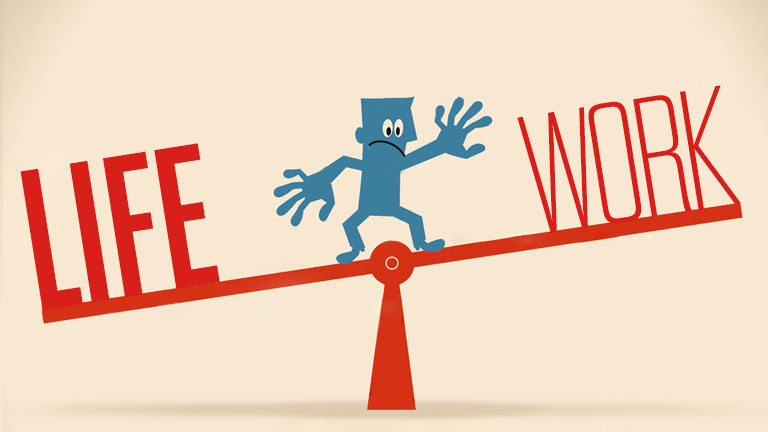
But mostly it's a fundamental realisation that you need more food to go around! you need to feed your accountant, your insurance agent, your employees or an assistant, and yourself so you can take a weekend off (or god forbid a Monday) without feeling guilty.

Your happiness costs more than food and rent

You are your own boss, and to be happy you need the capacity to be generous to yourself. Better pay, regular time off, and support (assistant, book-keeper, cleaner, babysitter) will make you happier. You'll be a better spouse, parent, employer, and business owner, and you'll have the capacity to be more generous to the people you care about (family, friends, employees, and clients)

But you can't be generous if you don't have much time to give. So raise your income goals, adjust your business model, and fatten up your business.

If you had more time and money in your business, where would it go? an assistant? Pay rise? Holiday? Salesperson? Babysitter? Personal Trainer? Less overtime? Somewhere else?


Friday, April 15, 2011

LinkedIn is now megga stream for business links

With more than 90 million registered users...  LinkedIn is the number one social media platform for  white-collared professionals today. Are you using it effectively?

LinkedIn is like an online resume, but scratch a bit deeper and it’s a platform for demonstrating your expertise and connecting with an online network. It’s nothing short of a source of raw possibilities.y
Whether you are a business owner or an employee, LinkedIn needs to be a part of your digital real estate and your online social presence.

What should you have on your profile?

There are numerous opportunities to highlight expertise and focus on interests within LinkedIn. The LinkedIn profile has a standard framework around which information can be added. There is an extensive field for a summary of your career profile, and a more limited field to provide details of your current position, past positions, education, recommendations, connections, and websites.
You’re in full control of what is displayed on the profile.

Improve your SEO with LinkedIn

“ LinkedIn needs to be a part of your digital real estate and your online social presence. ”
Spend as much time as you need to developing your LinkedIn profile, and remember that because it’s online, it needs to be SEO-savvy. In fact, you can use LinkedIn to help your search engine optimisation (SEO), since when your name is searched on Google, your LinkedIn profile will appear high in the search results.
You might even want to engage an SEO copywriter and get them to work their magic and create an engaging business profile specifically for LinkedIn that outlines your achievements and successes

Receive weekly updates on your network

The single business email that I receive and most importantly I take the time to read every week is the LinkedIn Network Updates email. If you’re not receiving this email, you need to change your LinkedIn email settings. (Select Settings / Receiving Messages, and at the Network Updates line, choose Weekly Digest Email).
This email summarises the major activities of your network over the past week: profile updates, new connections, new posts, new LinkedIn groups they’ve joined, new photos, new recommendations, polls, and applications (like Reading List by Amazon and TripIt).
Likewise using the ‘Share an update’ feature enables you to stay in front of your network on a weekly basis.

Photo left 
Phillip Smith.
founder and Chairman of Central Insurance Brokers, Perth WA (est 1980)  and
Founder of Aussie Exec Tours Bangkok 
"I've tripled my business network within 9 months with Linked in", without doubt the modern new age business tool
In today's dynamic market there is no 9 to 5 for the serious business guru. We have the tools to network and benchmark 24/7.   "Linked in" lets me see core BUSINESS characteristics about people.  The network provides an array of options to email, blog, share news, share invitations to events and merges brilliantly with tripit.  Did I mention it merges with Twitter and lets you show your website/s and Blog.  
Anyone who is serious about presenting in business should be in "linked in", further they should have a link to their profile page in their email signature.    Clients can see your connections which act as great reference to the support of you inn your business world.. 
90% of Business is people business right!
At the end of the day we spend so much time and money to shape the image of our Business website or business shop front to impress, yet 90% of business is about people so why present yourself, that you are in business and linked in.  
EASY TO USE
There learning modules are very easy (videos).  I've posted a webpage of some tips .. here


Monday, April 4, 2011

be sure your Second Startup Will Outshine Your First

What do the founders of Netflix , Zappos, Whole Foods, and Alibaba.com have in common?Founder and CEO of Netflix, Reed Hastings, cla...Image via Wikipedia

They were all started by entrepreneurs in their second (or third) act:
  • Before Reed Hastings founded Netflix, he founded Pure Atria Software, which was eventually acquired by Rational Software. Soon after the acquisition, Hastings took a couple of years off to think about his next business, which would be Netflix.
  • Before Zappos, Tony Hsieh founded LinkExchange, which was acquired by Microsoft for $265 million in 1999.
  • John Mackey started a health food store called “Safer Way” in a garage years before he founded Whole Foods.
  • Jack Ma founded China Pages four years before he launched Alibaba.com in 1999.
Jack Ma speaks during The Future of the Global...Image via WikipediaTake a look around and you’ll find that many entrepreneurs find their biggest success in their second act. In fact, I’d argue that having a chance at a second act is one of the best reasons to build your first business to sell it.
For starters, the second time around, you can bring all of your knowledge, contacts, and capital to a new idea, but I also think there are subtler factors that often make second acts more successful than the first:
1. You’ll feel less pressure.
When you are scraping tooth and nail to make something of your first business, every decision feels like do or die. Like a 16-year-old driving on the highway for the first time, new entrepreneurs tend to be a little heavy on the wheel, blowing every small problem into a life-threatening emergency (I know I did). In a second act, entrepreneurs mellow a bit and have a steadier hand at the wheel. Once a business owner has become financially independent, the pressure to succeed to feed your family is off.

2. You’ll be a better leader.
Being a bit mellower, entrepreneurs in their second acts often are better bosses. They tend to be a little more willing to give others credit and let juniors make mistakes — within reason — instead of micromanaging every detail. Like a parent who enjoys coaching his kids more than playing, the second-act business owner wants to succeed as part of a team, not just as an individual.

3. You’ll be motivated by a higher cause.
Once entrepreneurs are no longer motivated exclusively by making money, they are forced to find larger reasons for doing what they do — to start to think of how they can have a bigger impact on the world and make a difference. Being motivated by something other than money makes a founder much more likable as a leader and, therefore, better able to attract good people — loyal employees, partners and board members who want to contribute to a cause — to their mission.

So go ahead and build your first business — get the pressure, the mistakes, and a little bit of success out of the way. Then sell it and get to work on an even better second act.


John Warrillow is the author of Built To Sell: Creating a Business That Can Thrive Without You, which will be released by Portfolio/Penguin on April 28, 2011.

Enhanced by Zemanta